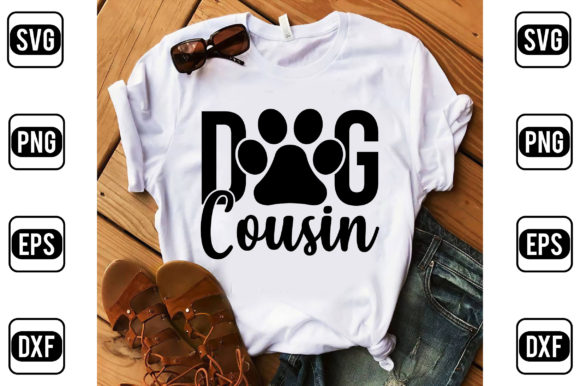
Dog Cousin: A Practical Embroidery Design Review
First Impression: Friendly, Simple, and Ready for Real Life
When I opened the Dog Cousin embroidery file bundle, my first thought wasn’t “cute”—it was “usable.” That’s rare. Many dog-themed designs lean into cartoon exaggeration or fussy detail that falls apart under thread. Dog Cousin avoids that trap. It’s got clean outlines, balanced proportions, and a gentle, approachable expression—like a friendly neighborhood pup who shows up unannounced but always fits right in. The layout feels intentional: compact enough for a 4x4 hoop, yet open enough to breathe on fabric without crowding. It reads well at small scale (think baby onesie chest or cap front) and holds presence at medium size (tote bag center panel, pillow cover corner). This isn’t just a graphics download—it’s a design that understands how stitch behaves.
Where It Shines: Real Projects, Real Customers
I tested Dog Cousin across three actual craft business needs: a custom embroidered linen tea towel for a local boutique, a set of personalized sweatshirts for a family reunion, and a batch of iron-on patches for a kids’ summer camp. In every case, it delivered clarity and charm without fuss. On the tea towel, the design stitched cleanly with light fill stitch and crisp satin-stitched edges—no bleeding, no skipped stitches, even over the subtle texture of midweight linen. For the sweatshirts, I paired it with a medium-weight cutaway stabilizer and found the stitch density generous but not overwhelming; it held firm through washing and tumble drying. And as a patch? Perfect. The outline stayed sharp, the inner details legible, and the shape lent itself naturally to a clean border finish.
This is where Dog Cousin earns its keep for Etsy sellers and small shop owners: it works *consistently*. Whether you’re embroidering on cotton poplin baby rompers, twill aprons, or fleece-lined hoodies, the design scales and adapts. It’s especially strong for personalized gifts—add a name below in a simple running stitch font, and you’ve got a warm, handmade feel without needing complex digitizing skills. For holiday embroidery or nursery decor, it lands gently: joyful but not loud, sweet but not saccharine.
Where to Pause—and Why
That said, Dog Cousin isn’t magic. Like any embroidery file, it asks for thoughtful pairing. On highly textured fabrics—think bouclé knit or heavy terry cloth—I recommend testing stitch placement first: the fine lines around the ears and muzzle can blur if the fabric surface is too uneven. On stretchy fabrics like jersey or lightweight interlock, use a tear-away + cutaway combo stabilizer and reduce top tension slightly—this keeps the satin stitch smooth and prevents puckering. Dark fabric? Confirm contrast: the design’s clean silhouette reads beautifully in white or cream thread, but avoid pale pastels unless you’re backing with white topping.
It’s also not ideal for ultra-tiny applications—say, a 2-inch cap front or a delicate baby headband. The eye detail and subtle ear contour rely on minimum stitch width, so below ~2.5 inches wide, some softening occurs. Likewise, avoid layering it directly over seams or thick hems without adjusting placement; curved surfaces like baseball caps need careful hooping and possibly minor repositioning to maintain symmetry.
Design Assets That Build Trust
What makes Dog Cousin more than just another digital embroidery file? It supports professionalism—not just aesthetics. When customers see this on a finished product, they sense care: the balanced spacing, the intentional negative space, the lack of overcrowded fills. That builds trust in your craft business. It also supports brand consistency: whether you’re selling embroidered kitchen towels under your own label or offering custom apparel as a service, Dog Cousin fits seamlessly into a cohesive visual language—friendly, grounded, quietly confident.
For digital product sellers, the included SVG, PNG, DXF, PDF, and EPS formats are a real plus. You can easily drop Dog Cousin into printable mockups, create layered social media assets, or prep listings for craft platforms—all without redigitizing. Just remember: since this is a Crafts category Graphics download, confirm commercial license terms before bundling it into editable templates or reselling the files themselves.
Practical Notes Every Embroiderer Should Check
- Always test on scrap fabric first—especially when switching between fabric types or stabilizers.
- Review thread color contrast on both light and dark backgrounds before stitching a client order.
- Check hoop size compatibility: while Dog Cousin fits comfortably in standard 4x4 hoops, verify your machine’s max dimensions if using larger formats.
- Inspect small details in your embroidery software—look for tight corners or nested curves that may need slight manual cleanup.
- Try black-and-white mockups to assess value contrast and legibility before committing to thread.
- Use proper stabilizer—lightweight cutaway for stable wovens, hybrid for knits, and water-soluble topping for dense textures.
- Confirm licensing before selling finished items commercially or including Dog Cousin in digital product bundles.
In short: Dog Cousin is a reliable, versatile, and quietly expressive machine embroidery design—one that serves both the maker’s workflow and the buyer’s emotional response. It doesn’t shout. It connects. And in a crowded market of digital embroidery files, that’s exactly what helps your handmade product stand out—not as “more,” but as *right*.