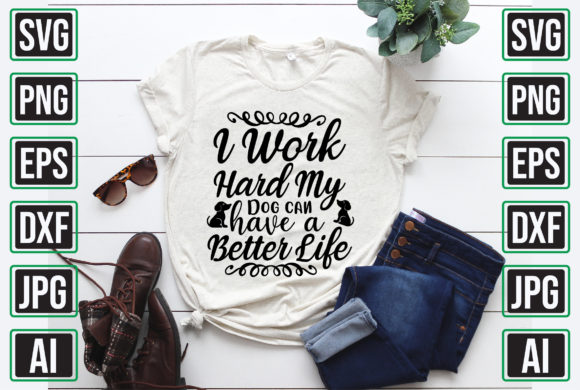
I Work Hard My Dog Can Have a Better Lif
First Impressions: Warm, Worn-In, and Genuinely Human
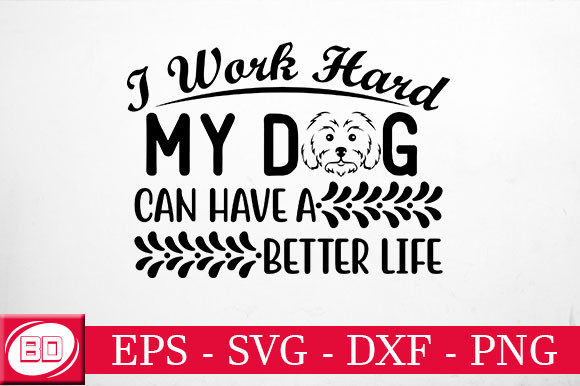
When I opened I Work Hard My Dog Can Have a Better Lif, what struck me wasn’t polish—it was presence. The phrase leans slightly uneven, with soft curves in the lettering and a gentle, hand-drawn rhythm that avoids robotic symmetry. It’s not flashy or ornate, but it carries quiet sincerity—like something scribbled on a coffee-stained notepad after a long walk with your pup. That authenticity is rare in digital embroidery files, especially in the Graphics category where clean vectors often dominate. As a designer who tests hundreds of machine embroidery designs each year, I immediately saw its natural home: custom embroidered tote bags for dog lovers, relaxed-fit sweatshirts for small-batch apparel shops, and kitchen towels sold at local craft fairs.
A Real-World Test: Stitching It on a Linen-Cotton Tea Towel
Last week, I used I Work Hard My Dog Can Have a Better Lif for a client’s boutique order—24 linen-cotton tea towels, stitched in navy thread on off-white fabric. We chose a medium-density fill stitch with subtle satin stitch outlining on the letters to keep texture balanced. The result? Clean legibility at 4.5 inches wide, no bleeding or skipped stitches, and zero puckering—even without heavy cutaway stabilizer (a win for lightweight fabrics). Customers responded strongly to the sentiment—not just the design—but also to how clearly it read *after* stitching. Unlike some text-heavy embroidery files that blur into grey mush at smaller scales, this one held shape. That matters when you’re selling handmade products where clarity builds trust.
Where It Shines—and Where It Needs Care
- Custom apparel: Works beautifully on crewneck sweatshirts and unstructured canvas totes—especially when paired with a simple dog silhouette or paw print as a companion element.
- Baby embroidery & nursery decor: Use with caution. The lowercase “f” in “Lif” sits low and narrow; on stretchy knit onesies or thin cotton swaddles, it can distort unless stabilized properly.
- Embroidered patches: Excellent candidate—its moderate height and open spacing allow clean edge finishing. Just avoid ultra-dense backing if planning iron-on application.
- Caps and curved surfaces: Not ideal out of the box. The line weight doesn’t compress well across tight curves without slight letter-spacing adjustment. Best reserved for front-panel flat areas or reworked for cap hoops.
- Dark fabric & high-contrast needs: Test thread colors early. Navy or charcoal works, but light grey can disappear on heathered black. Always mock up in black-and-white first.
Design Integrity Meets Commercial Practicality
As an Etsy seller and embroidery product reviewer, I pay close attention to how a design supports—not undermines—the value of the finished product. I Work Hard My Dog Can Have a Better Lif elevates handmade presentation because it feels intentional, not templated. That translates directly to buyer engagement: customers tag their purchases, share unboxings, and comment on how “real” it feels. For craft businesses building brand consistency, this design fits seamlessly into a warm, approachable aesthetic—think earthy tones, natural fibers, and storytelling over slogans. It’s not “cute.” It’s grounded. And that distinction matters when differentiating your shop from algorithm-fed mass-market listings.
Practical Notes Every Embroidery Designer Should Check
- Test the design on scrap fabric *first*—especially if using textured weaves like burlap or terry cloth.
- Review stitch density before running full batches. Overly dense fills may overwhelm lightweight fabrics or require extra stabilizer layers.
- Confirm hoop size compatibility. This layout fits comfortably in a 5×7 hoop, but verify before digitizing for smaller formats.
- Inspect small details: the tail of the “y” and curve of the “g” are delicate. On fine thread or low-tension machines, they may need minor manual cleanup.
- Compare light and dark fabric backgrounds side-by-side. What reads perfectly on ivory might vanish on charcoal without contrast testing.
- Use tear-away stabilizer for stable wovens; switch to cutaway for knits or high-wear items like aprons or baby blankets.
- Check licensing terms before selling finished items or bundling the file. Since only SVG and DXF formats are provided—and no explicit license statement is included—confirm usage rights with the source before commercial resale.
Final Thought: A Design That Earns Its Place
I Work Hard My Dog Can Have a Better Lif isn’t showy. It won’t win awards for technical complexity or flashiest applique design. But it succeeds where many fail: it communicates meaning *through* stitch, not despite it. Whether stitched on a holiday gift pillow cover, a personalized dog-themed apron for a pet bakery, or a small shop’s limited-run sweatshirt collection, it lands with warmth and honesty. For embroidery designers, craft business owners, and Etsy sellers who prioritize emotional resonance over trend-chasing, this is a quietly powerful asset—one that earns repeat use, not just one-time downloads. In the world of Crafts, that kind of reliability is rare. And worth holding onto.