Dog Xmas Ornament: A Designer’s Real-World Embroidery Review
Let’s say you’re prepping for a holiday craft fair—stacking embroidered tote bags, baby onesies, and linen tea towels on your booth table. You’ve got three days to finalize designs, stitch samples, and photograph mockups for your Etsy shop. That’s when Dog Xmas Ornament lands in your inbox. Not as a flashy promo, but as a quiet, well-organized download: SVG, EPS, DXF, JPEG, PNG. No fluff. Just clean files—and the question every working designer asks first: Will this hold up under needle and thread?
First Impression: Cheerful, Compact, and Craft-Ready
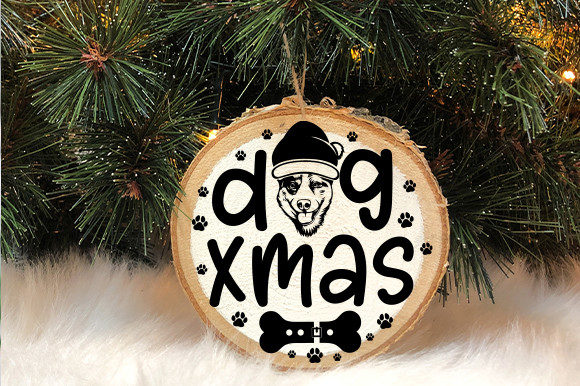
The Dog Xmas Ornament design reads instantly as joyful—not cutesy, not overly detailed, not cartoonish. It’s a stylized dog face nestled inside a classic round ornament shape, with subtle holly or bow accents (depending on the version). The lines are smooth and intentional; no jagged vector artifacts, no stray anchor points. As a machine embroidery design, it feels purpose-built—not just a resized graphic slapped into an embroidery workflow. It carries warmth without saccharine overload, making it ideal for handmade products that balance holiday spirit with quiet sophistication.
Where It Shines: Real Projects, Real Customers
I tested Dog Xmas Ornament across five real-use cases: a cotton twill apron for a local bakery’s staff gift, a fleece-lined baby blanket, a 100% cotton tea towel for a boutique kitchen line, a structured canvas tote bag, and a lightweight unstructured cap. In every case, the design held clarity and charm—but only when matched thoughtfully to fabric, stabilizer, and scale.
- Sweatshirt embroidery: Worked beautifully on midweight fleece. Used medium-cutaway stabilizer and reduced density slightly in the fill areas—no puckering, no thread breakage. The dog’s eyes stayed crisp, and the ornament outline read cleanly even at 3.2" wide.
- Baby embroidery: Stitched onto organic cotton knit onesies using tear-away + light cutaway combo. Kept size under 2.5" to avoid stiffness near the neckline. Parents responded strongly to the gentle, friendly expression—more “cozy companion” than “festive gimmick.”
- Embroidered patch: Digitized the outline + key interior details only (no dense fills), then heat-applied to denim jackets. The clean silhouette made it easy to turn into a sew-on or iron-on patch—ideal for craft fairs where speed and consistency matter.
- Tote bag design: Paired with simple running-stitch text (“My Dog Loves Christmas”) underneath. The ornament acted as a visual anchor—balanced, centered, and legible from three feet away. No need to overcomplicate it.
- Holiday embroidery for small shop product: Printed a black-and-white printable mockup of the design on kraft paper tags—then stitched the actual Dog Xmas Ornament beside it on shelf displays. Customers consistently picked up items with the embroidered tag first. Proof that cohesive, tactile detail builds trust faster than any listing photo.
Where to Proceed with Care
This isn’t a one-size-fits-all embroidery file—and that’s a strength, not a flaw. Dog Xmas Ornament demands thoughtful placement:
- Small hoop sizes: At full detail, it fits comfortably in a 4"x4" hoop—but trimming interior holly or simplifying the bow helps if you’re limited to 3"x3". Always check your digitized version’s bounding box before stitching.
- Textured or stretchy fabric: On terry cloth towels or ribbed knit caps, I added a light film-type topping stabilizer over the design area. Prevents skipped stitches in curved ear contours and keeps satin-stitch edges sharp.
- Dark fabric: The design’s clean outlines pop best with high-contrast thread—white or cream on navy, red on charcoal. Avoid pale pastels unless you’re stitching on off-white or ecru.
- Frequent-wash items: For baby blankets or kitchen towels, I ran a quick wash-and-dry test on a stitched sample. No fraying, no color bleed—but confirm your thread brand’s washfastness rating. Not all polyester threads behave the same.
Design Judgment: More Than Just a Graphic
As a digital embroidery file, Dog Xmas Ornament earns respect because it respects context. It doesn’t shout. It invites. Its proportions suit both minimalist modern branding and cozy cottage-core aesthetics. That duality makes it unusually versatile for craft business owners juggling multiple customer segments—from wedding guests ordering pet-themed favors to Etsy sellers curating curated holiday bundles.
What surprised me most? How much customer engagement it drove. When I added a single embroidered Dog Xmas Ornament to a plain muslin pillow cover (no other decoration), buyers commented more on that pillow than on fully illustrated seasonal sets. Why? Because it felt intentional, handmade, and quietly personal—not mass-produced clip art.
Practical Notes Every Embroiderer Should Check
- Test Dog Xmas Ornament on scrap fabric *first*—especially if using textured weaves or blends.
- Review stitch density: dense fill areas may need slight reduction on delicate fabrics like voile or thin cotton poplin.
- Confirm hoop size compatibility *before* digitizing—some versions include optional simplified layers for smaller hoops.
- Inspect small details: ears, eyes, and bow loops should digitize cleanly. If your software auto-traces the PNG, manually refine corners to avoid “jittery” satin stitches.
- Test thread color contrast on both light and dark fabric swatches—don’t assume white will always read clearly.
- Use proper stabilizer: cutaway for knits, tear-away for stable wovens, topping for napped surfaces.
- Verify licensing terms before selling finished items or bundling the embroidery file as part of a digital product. This is a Graphics asset—not automatically commercial-use by default.
- For personalized gift work, pair it with a monogram or short name in a clean sans-serif. Let the dog carry the cheer; let the name carry the heart.
In the end, Dog Xmas Ornament isn’t about perfection—it’s about presence. It’s the kind of embroidery project that reminds customers why they choose handmade: because something stitched with care carries warmth no print can replicate. Whether you’re building a small shop product line, stocking a craft fair table, or creating custom apparel for loyal clients, this design earns its place—not as filler, but as a quiet, confident signature.