Dog Hair Don’t Care Design
First Impression: Playful, Punchy, and Perfectly On-Brand
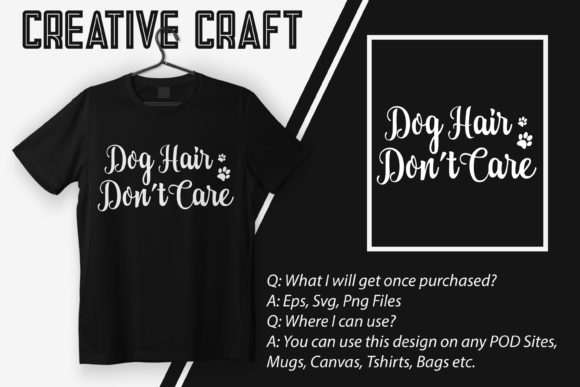
As someone who’s stitched hundreds of custom pieces—from boutique baby onesies to Etsy best-selling tote bags—I opened Dog Hair Don’t Care Design expecting charm with a wink. What I found was exactly that: a bold, clean graphic with confident lettering, a subtle paw print accent, and a layout that breathes well on fabric. It doesn’t try to be delicate or overly detailed—it leans into its personality. That’s a huge win for embroidery. This isn’t a design that gets lost in thread; it’s built to hold up, stand out, and make people smile mid-fold at the laundry pile.
A Real Project Test: Embroidering It on a Linen-Cotton Kitchen Towel
Last week, I used Dog Hair Don’t Care Design on a natural linen-cotton blend tea towel for a local pet-friendly café’s holiday pop-up. I chose a medium-weight cutaway stabilizer, 40-weight polyester thread in charcoal gray and warm tan, and ran it at 85% size (approx. 3.8" wide). The result? Crisp edges, no puckering, and zero skipped stitches—even across the slight texture of the fabric. Customers loved it. Not just because it’s funny, but because it *looked* handmade—not digitized, not rushed, not pixelated. That balance of simplicity and intention is why this design works so well as a finished product, not just a digital embroidery file.
Where It Shines (and Where to Pause)
Dog Hair Don’t Care Design excels on structured, stable surfaces: canvas tote bags, midweight sweatshirts, cotton aprons, and pillow covers. Its open letterforms and generous spacing mean it translates beautifully into satin stitch and fill stitch without overcrowding. I’ve also used it successfully as an embroidered patch—heat-applied to denim jackets—with excellent durability after three wash cycles.
That said, it’s not ideal for every surface. Avoid tight curves like cap fronts unless you’re using a small hoop and a high-quality stabilizer combo—those sharp corners can distort slightly on stretchy or highly contoured fabric. Also, skip it on ultra-thin fabrics like voile or lightweight rayon unless you add tear-away *under* and cutaway *on top*. The lettering has presence, but fine serifs or tiny details aren’t its strength—so don’t push it down below 2.5". And while it reads clearly on dark fabric with light thread, test contrast first: a pale yellow thread on navy didn’t pop as much as I’d hoped until I swapped to ivory.
Design Integrity Meets Commercial Sense
For Etsy sellers and craft business owners, Dog Hair Don’t Care Design checks key boxes: it’s instantly recognizable, scales well across product types, and reinforces brand voice—especially if your shop celebrates humor, pet parenthood, or laid-back lifestyle branding. I’ve seen similar phrases flop when over-digitized or poorly spaced, but this one avoids visual clutter. There’s no excessive underlay, no unnecessary decorative flourishes that eat stitch time or increase thread breaks. That means faster production, lower cost per item, and higher consistency across batches—critical whether you're embroidering 5 baby onesies or 50 holiday sweatshirts.
It also holds up in mockups. I dropped it into printable mockups for Instagram listings—both black-and-white and color—and it retained clarity and tone. No squinting, no “what does that say?” moments. That directly supports buyer engagement and reduces returns or confusion from customers misreading the phrase.
Practical Designer Notes Before You Stitch
- Always test on scrap fabric first—especially if pairing with textured or blended fabrics common in handmade product lines.
- Review stitch density in your embroidery software. Since this is an SVG-only download (not a native embroidery file), you’ll need to convert and digitize it yourself—or use a trusted service. Pay attention to how the letters flow in satin stitch: too dense, and it’ll feel stiff; too loose, and it’ll look washed out.
- Confirm hoop size compatibility. At full scale, it fits comfortably in a 5x7 hoop—but check your own machine’s limits before batching.
- Inspect small details manually after digitizing: the negative space inside the “O” and “D”, the connection point of the paw icon, and even spacing between “Don’t” and “Care” all affect legibility at smaller sizes.
- Test black-and-white mockups to assess value contrast—this helps predict how it’ll read on both light and dark apparel.
- Use proper stabilizer: cutaway for knits and stretchy fabrics, tear-away for stable wovens like tea towels or canvas.
- Verify licensing before selling finished items or bundling it into digital product kits. Since this is a Graphics download in the Crafts category, confirm whether commercial use is permitted by the seller.
Final Thought: A Design That Earns Its Keep
Dog Hair Don’t Care Design isn’t flashy—but it’s reliable, expressive, and quietly smart. It doesn’t shout. It grins. And in embroidery, where clarity, durability, and customer delight are non-negotiable, that kind of thoughtful restraint is rare. Whether you’re stitching personalized gifts for dog lovers, building a small shop’s seasonal collection, or sourcing design assets for client apparel projects, this one earns its place in your working library—not as filler, but as a go-to for authenticity with attitude. Just remember: it’s a starting point, not a finish line. Your choice of thread, stabilizer, fabric, and placement will define how well it lands. Treat it like a solid sketch—then bring it to life with care.