Merry Christmas Dog
A Designer’s First Look: Charm, Clarity, and Holiday Heart
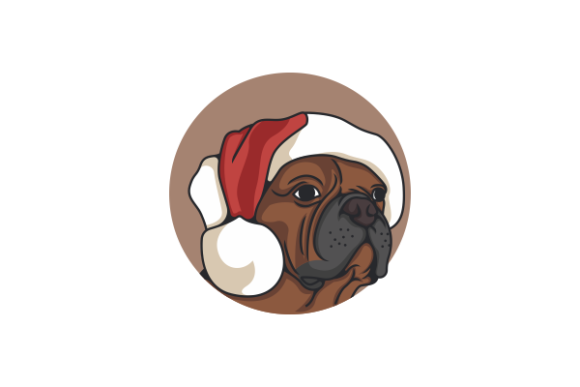
When I opened Merry Christmas Dog for the first time, I wasn’t scanning for bells or bows—I was watching how the shape settled on screen. It’s warm but not cloying, playful but not chaotic. The dog sits front-facing with a soft curve to its posture, ears perked just enough, a tiny bow or collar detail (depending on version) adding subtle personality without clutter. There’s no forced cuteness—just quiet confidence in the line work and balanced negative space. That tells me this isn’t just another holiday clipart drop-in; it’s a considered machine embroidery design built to hold up when stitched, not just viewed.
Real Project Test: Embroidering a Holiday Tote for a Local Boutique
Last week, I prepped Merry Christmas Dog for a custom embroidered tote bag—cotton canvas, medium-weight, meant for a small-town gift shop’s holiday collection. I chose a 4x4 hoop size, matched thread colors to classic red-and-green with cream accents, and used tear-away stabilizer underneath plus light cutaway on the back. What stood out immediately was how cleanly the curves translated: the dog’s rounded muzzle, the gentle arch of its tail, even the slight taper in the legs—all stitched crisply, no puckering or distortion. No dense fill stitch overload, no overworked satin stitch edges. Just clear, confident embroidery file behavior.
Where It Shines—and Where to Pause
Merry Christmas Dog works beautifully on sweatshirt embroidery, tote bag design, and pillow covers—fabrics with enough body to support moderate stitch density without shifting. It’s also a natural fit for aprons, kitchen towels, and holiday gifts where charm and readability matter more than micro-detail. On baby onesies or knit caps? Proceed thoughtfully. The design’s clean silhouette helps, but fine details—like thin collar lines or small paw outlines—can blur on stretchy or ultra-soft fabrics unless you adjust underlay and reduce density. Always test on scrap first, especially for baby embroidery or personalized gift items where clarity equals trust.
For embroidered patch applications, it holds up well at 3–4 inches wide—but avoid shrinking it below 2.5 inches unless you’ve verified small-letter legibility (if text is included). And while the description says “you can edit it without losing quality,” remember: editing means scaling *up* or adjusting color layers—not adding intricate lacework or tightening already-tight corners. This is a Graphics-class asset: strong as-is, flexible within reason, not infinitely expandable.
What It Adds to Your Craft Business—Beyond the Stitch
As an Etsy seller and small shop product creator, I pay attention to how a design affects perceived value. Merry Christmas Dog reads as handmade—not generic. Customers notice that. When stitched on a linen tea towel or organic cotton sweatshirt, it feels intentional, curated, quietly joyful. That builds brand consistency across your craft business line and supports buyer engagement—people tag friends, share unboxings, ask for matching sets. It also translates cleanly into printable mockups: whether you’re showing it on a mug, card, or digital preview, the composition stays friendly and legible at multiple sizes.
That said, don’t assume it’s plug-and-play for every surface. On dark fabric, contrast matters—test your thread choices in both natural and artificial light. On textured fabrics like terry cloth or bouclé, consider simplifying small interior details or using a slightly heavier stabilizer. And if you're planning commercial embroidery runs (think wholesale aprons for cafés or boutique holiday bundles), verify licensing terms before mass production—Merry Christmas Dog is listed for Crafts use, but commercial resale of finished items may require separate permissions depending on source.
Practical Notes Every Embroidery Designer Should Check
- Test on scrap fabric first—especially with your exact stabilizer, thread, and machine tension settings.
- Review stitch density before hooping. If the fill areas feel heavy for your fabric, reduce density by 5–10%.
- Confirm hoop size compatibility. This design fits standard 4x4 and 5x7 hoops comfortably—but double-check your own machine’s limits.
- Inspect small details at actual stitch-out size: collars, eyes, bow knots. If they vanish on your test run, simplify or enlarge slightly.
- Try black-and-white mockups to gauge contrast and silhouette strength—this reveals what customers will actually see from across a craft fair table.
- Use proper stabilizer for your base fabric: tear-away for stable weaves, cutaway for knits, and lightweight fusible for delicate linens.
- Check licensing before selling finished products or bundling Merry Christmas Dog into digital embroidery kits—it’s labeled for Crafts use, but clarify scope before scaling.
Final Thought: A Design That Feels Like a Collaborator, Not a Compromise
Merry Christmas Dog doesn’t shout. It doesn’t need to. It’s the kind of embroidery project asset that makes your workflow smoother—not because it’s “easy,” but because it respects your time, your materials, and your customer’s expectations. Whether you’re stitching a single personalized gift or prepping fifty small shop products for holiday inventory, it delivers consistent, warm, professional results. It belongs in your library not as filler, but as a reliable, joyful anchor—proof that good holiday design doesn’t have to choose between heart and craftsmanship.